


 En
En  Português
 Svenska
 Türkçe
 Română
 Polski
 Français
 Español
 Deutsch
 Dansk
Dansk Suomi
Suomi Norsk Nynorsk
 Lietuviškai
 日本語
日本語 Русский
 中文 (中国)
 Tiếng Việt
 Italiano
 Čeština
 Nederlands
 العربية


 Bitcoin
 Ethereum

Top 9 RUST Trading Sites in 2026 – Check Our RUST Skins Stores


Disclaimer: The opinions shared are the author’s own and reflect current market conditions. Always do your own research, as neither the author nor HellaGood.Marketing is liable for any financial losses.
Affiliate Disclosure: Some content may contain affiliate links or promo codes. These are clearly marked and have no impact on our editorial independence.
The best Rust trading sites right now are SkinsMonkey, SkinCashier, and Tradeit.gg. If you want fast trades, fair prices, and bonuses that actually add value, these three are the safest places to start.
We’ve compared the best Rust gambling sites based on fees, bot speed, payouts, and reputation to see which ones are worth using in 2026.





Log in to get up to 10$ bonus on first trade!; Lower commission for joining Steam group; get extra 45% bonus from your payment.
Daily Rewards, Free Rust skins, Giveaways, get +2% value on your items for adding ‘iTrade.gg’ to your Steam nickname





What is Rust Trading
Rust trading means exchanging in-game items or selling Rust skins for real money on trading platforms. Players can trade resources like scrap, sulfur, weapons, or tools inside the game to progress faster and save time farming.
Outside the game, Rust trading usually refers to skins. Players earn or buy cosmetics, then use trading sites to swap them, store value, or sell Rust skins for real money. Skin prices depend on rarity, demand, and condition, so choosing the right platform matters if you want fair value.
In-game Trading in Rust
In-game trading in Rust means exchanging resources, items, or gear with other players to get what you need faster. Instead of farming everything yourself, you can trade through vending machines, safe zones, or direct player deals.
As with CS2 gambling sites, most trades happen in outposts or player bases where vending machines list items for scrap or other resources. Players also arrange trades in chat or with teammates. In-game trading helps save time, balance shortages, and move progress forward without grinding every material yourself.
Rust Skin Trading
Rust skin trading means buying, selling, or swapping cosmetic Rust items on trading platforms to get value from them. Players collect skins through gameplay, Steam purchases, or drops, then use trading sites to exchange them for other skins, balance, or real money.
Most platforms work with automated bots that complete trades instantly once both sides agree. Skin prices depend on rarity, demand, and condition, similar to CS2 skin trading markets. The goal is simple. Trade skins you don’t want for ones you prefer or cash them out safely.
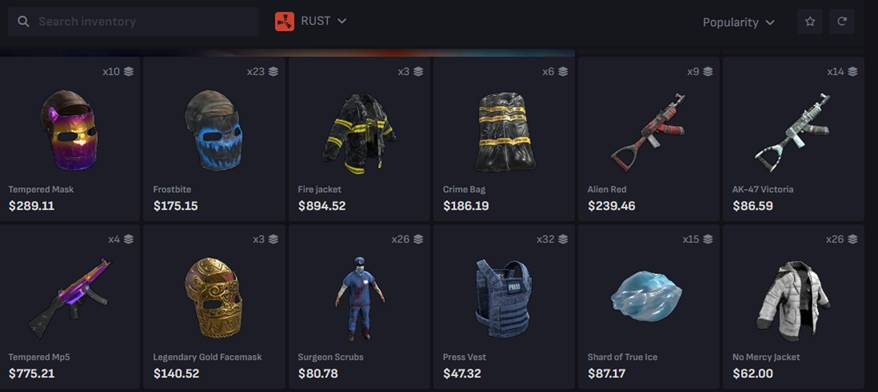
9 Best Trusted Rust Trading Sites in April 2026
The best Rust trading sites in 2026 are platforms with fast bots, fair pricing, and reliable withdrawals.
| Rank | Site | Best For | Fees | Bonus / Perk | Action |
|---|---|---|---|---|---|
| 1 | SkinsMonkey | Fast skin swaps & strong bonuses | ~7% avg. | Free $5 + deposit bonus up to 35% | Trade Rust Skins |
| 2 | SkinCashier | Selling skins for cash | No selling fee (price margin applied) | 3% extra on cashouts | Trade Rust Skins |
| 3 | Tradeit.gg | Balanced trading & store access | Low trading fee | 10% top-up bonus or store discount | Trade Rust Skins |
| 4 | DMarket | Marketplace variety & liquidity | Market-based fee | Promo codes + periodic giveaways | Trade Rust Skins |
| 5 | CS.Trade | Low-value item swaps | ~2–5% | First-trade bonus + extra payment value | Trade Rust Skins |
| 6 | iTrade.GG | Rewards & bonus incentives | Higher (~20%) | Daily rewards + item value boost | Trade Rust Skins |
| 7 | Swap.GG | Balance top-ups & quick trades | ~5–8% | 15% bonus on deposits | Trade Rust Skins |
| 8 | RustyTrade | Simple Rust-only trading | Higher fees | No bonus, pure marketplace | Trade Rust Skins |
| 9 | CS.Deals | Low-fee selling marketplace | ~2% | Daily giveaways | Trade Rust Skins |
How to Choose a Trading Site
Choosing the right Rust trading site matters because of small differences in fees, pricing, and security. Some platforms are built for fast swaps, others for cashing out or hunting rare items, so picking the wrong one can cost you.
If you’ve ever compared markets like CS2 skins gambling platforms, you already know the deal (speed, trust, and pricing make all the difference). Here’s what actually matters when choosing a Rust trading site.
Fees and Price Spread
Fees directly affect how much value you keep when trading skins. Most Rust trading sites charge between 2% and 15%, but the real cost often hides in pricing spreads. Some platforms quietly undervalue your items by 5–12% instead of showing a clear fee.
Always compare the total value you send versus what you receive. Good platforms show trade ratios before confirmation and allow item-by-item comparisons. This is similar to how CSGO skin exchange sites display price differences to stay competitive.
Tip: If a bonus is offered, check whether inflated prices cancel out the reward.
Security and Account Protection
Security is critical because Steam accounts and skins are frequent phishing targets. Reliable platforms use Steam OpenID login, HTTPS encryption, and verified trading bots to prevent scams.
Always confirm that the bot sending the trade is linked to the platform’s official Steam group. Enabling Steam Guard Mobile Authenticator also protects your inventory, as it adds confirmation delays for suspicious activity.
Trusted platforms clearly explain how trades are verified and secured. This level of transparency is standard on major marketplaces and even on large Bitcoin casino sites handling crypto transactions.
Trade Speed and Bot Reliability
Modern Rust trading platforms rely on automated bots to complete trades instantly. On good sites, trade offers usually arrive within 5–20 seconds after confirmation. Slow or inconsistent bots often indicate poor liquidity or backend issues.
Reliable platforms also show whether items are currently available before you submit the trade. This avoids cancellations or delays.
Inventory Size and Item Liquidity
Inventory size affects both pricing and trade success. Platforms with thousands of active items usually offer better rates because they have a better supply and demand balance. Smaller inventories often mean worse trade ratios or limited options.
High liquidity also ensures popular skins move quickly without price manipulation. This works similarly to large csgo skin exchange sites, where active markets keep prices stable and trades fast.
Tip: If a site shows the same limited skins repeatedly, it may struggle to match demand and offer fair exchanges.
Cashout Options and Payment Methods
Not all trading sites allow real withdrawals. Some only provide internal balance or Steam wallet value. As with CSGO cashout, Rust sites also support crypto withdrawals, bank transfers, or e-wallets.
Crypto payouts are usually the fastest, often processed within hours. Bank withdrawals can take several days and may include extra fees.
Always check minimum withdrawal limits and verification requirements before trading.
Reputation and User Reviews
A platform’s reput often reveals more than its marketing claims. Established trading sites usually have thousands of Trustpilot reviews, active Discord communities, and visible trading volume.
Look for consistent feedback about successful withdrawals, fair pricing, and responsive support. Repeated complaints about delayed trades or missing items are strong warning signs.
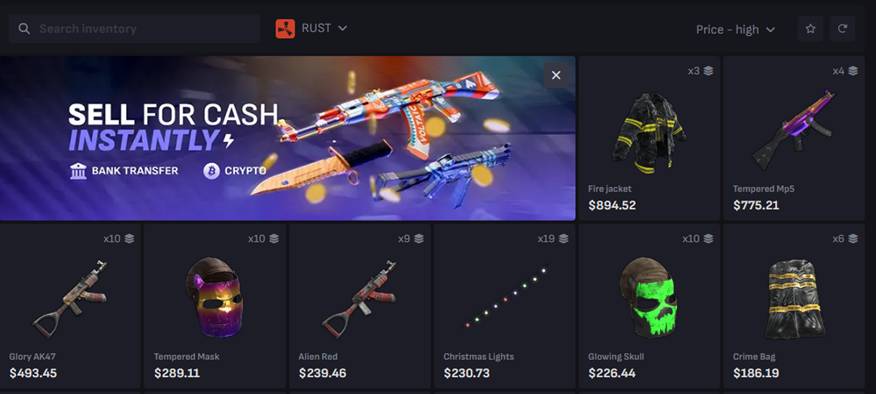
Rust Trading: How to Trade Rust Skins
Most sites use automated bots, so Rust trading takes only a few minutes from login to completed trade.
- Choose a trusted Rust trading site and create an account.
- Log in through Steam and add your Trade URL in the settings.
- Enable Steam Guard so you can confirm trades instantly.
- Select the skins you want to trade or sell from your inventory.
- Pick the skins or balance you want in return and review the value.
- Confirm the trade, then accept the Steam offer sent by the site’s bot.
- Finish the trade and withdraw funds or continue swapping skins.
Benefits of Rust Trading
- Easy to start: Did you know that all it takes to start Rust trading is a valid account on one of the suggested Rust trading sites? The entire sign-up process is simple and only takes a few minutes to set up.
- Variety of bonuses and promotions: Just by staying active, players can get their hands on different bonuses and promotions that can range from giveaways to free money or even top-up offers.
- Plenty of Rust skins to choose from: If you are sticking with the best Rust trading sites, you can expect to find a stacked inventory, starting with commons skins and going to premium ones.
- Dedicated customer support: If you ever get stuck on such a website and need help knowing what to do next, you are in luck because dedicated customer support awaits. Describe the issues you are facing and get a quick reply.
- Instant trades: Players can trade Rust skins instantly and without any restrictions if there is no trade block. After going through with the trade, the Steam trade offer should instantly be sent out.
FAQs
What is the best website for trading Rust skins?
SkinsMonkey is the best as it offers fast swaps and bonuses, SkinCashier is a good pick if you want to sell skins for money, and Tradeit.gg works well for balanced trading. The safest choice is usually a platform with active bots.
How do I trade in Rust?
To trade Rust skins, log in to a trading site with your Steam account, add your trade URL, and select the skins you want to exchange. Then choose the items or balance you want back, confirm the trade on the site, and accept the Steam offer sent by the platform’s bot. Once accepted, the skins move instantly to the new inventory.
Can you sell Rust skins for real money?
Yes, many Rust trading platforms allow you to sell skins for real money. After listing or trading your skins, you can usually withdraw funds using crypto, bank transfer, or online wallets. Always check withdrawal fees, minimum payout limits, and verification rules before selling to avoid delays.
Are Rust trading sites safe to use?
Rust trading sites can be safe if you use well-known platforms with secure Steam login, verified bots, and active user feedback. Avoid sites that ask for your Steam password directly or send trade offers from unknown accounts. Checking recent reviews and confirming the bot’s Steam profile helps reduce scam risks.
Why do Rust skins have real value?
Rust skins have value because they are limited digital items traded on open marketplaces. Prices depend on rarity, demand, and how popular the skin is in the community. Since players can buy, sell, and trade them freely, the market works similarly to other game skin economies.