





 En
En  Português
 Svenska
 Türkçe
 Română
 Polski
 Français
 Español
 Deutsch
 Dansk
Dansk Suomi
Suomi Norsk Nynorsk
 Lietuviškai
 Magyar
 Ελληνικά
 日本語
日本語 Русский
 中文 (中国)
 Tiếng Việt
 Italiano
 Čeština
 Nederlands
 العربية


 Bitcoin
 Ethereum


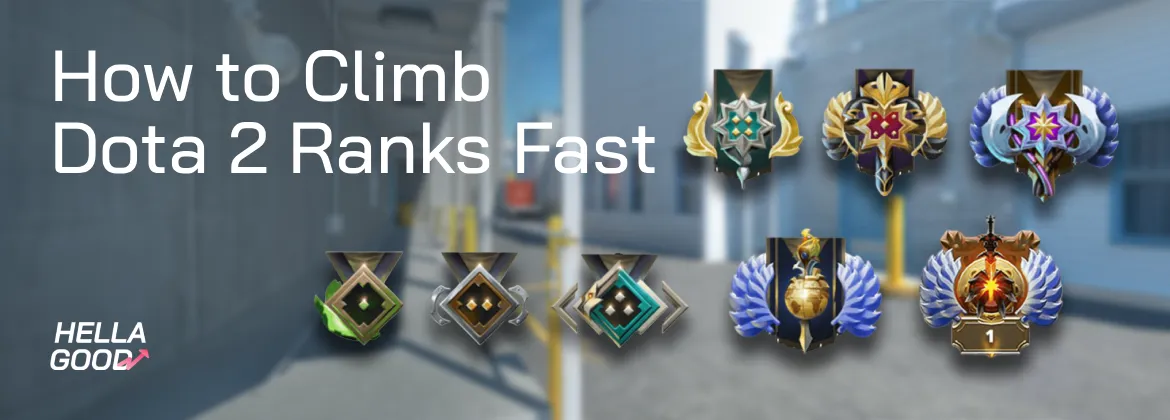
Rising in the ranks of Dota 2 is one of the most challenging tasks in the field of competitive gaming and requires mechanical skill, tactical complexity, and psychological endurance among millions of players. The ever-changing patches, metas, and the increasingly more competent player base all mean that to be ahead, you need to be both strategic and disciplined. In 2026, the patches of balance and meta evolutions presented in patch 7.39e, including improved jungle mechanisms and changes to heroes, make the ladder more competitive than ever, with the distribution of players becoming even tighter in the mid-ranks.
This guide provides new, practical knowledge that is season-specific, such as how to master using the Glicko-2 system, as well as taking advantage of 2026-specific tricks, such as using Double Down more effectively and optimally when to recalibrate, allowing you to rise through the brackets faster, thus making your road to a higher MMR a lot easier.
Overview of Dota 2 Ranks and MMR
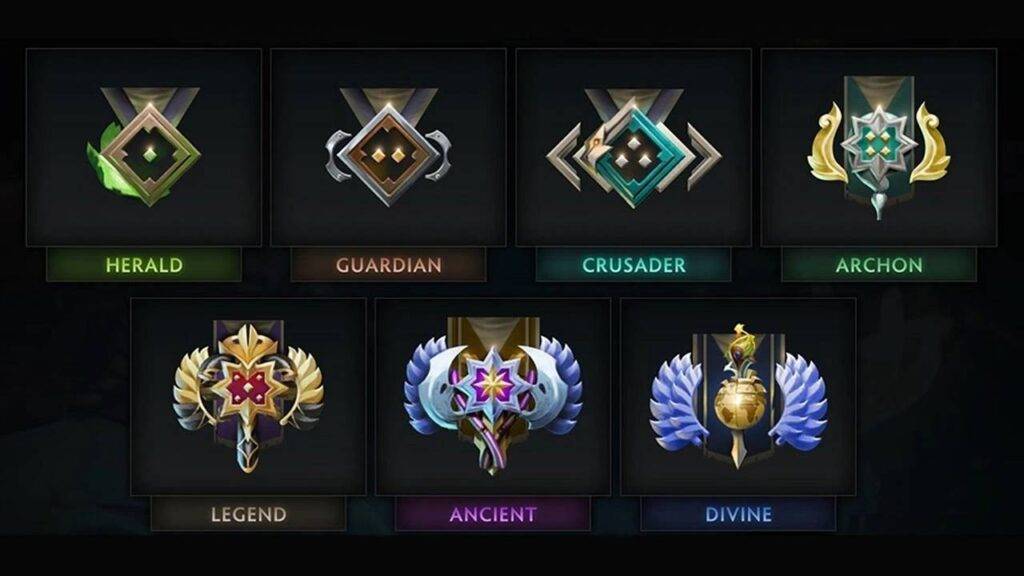
The competitiveness of Dota 2 is built upon the ranks and MMR (Matchmaking Rating). Players are arranged into ranks such as Herald to Immortal, which rank players depending on their skill relative to each other, and MMR, which is the fundamental skill statistic in Dota 2, giving the numerical measure of a player’s bracket. Before making any climb plan, it is important to understand your position in the system and the evaluation of your play. In the absence of such a background, players tend to have unrealistic expectations or misjudge their improvement.
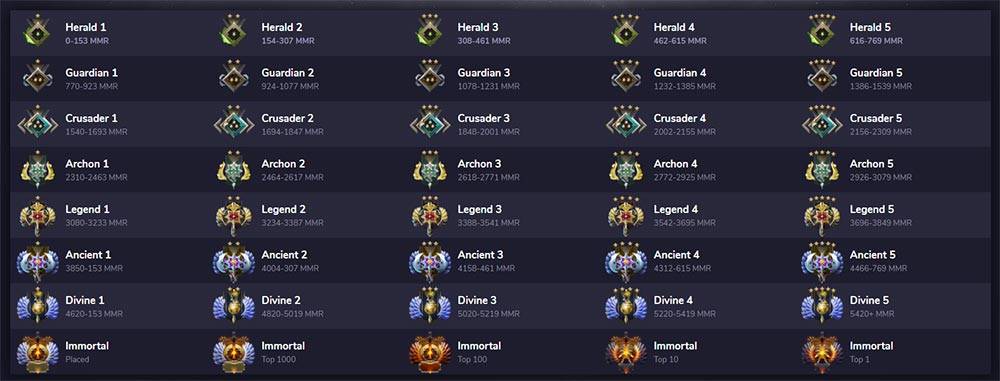
Dota 2 Ranks and MMR Mapping for 2026
| Rank | Approx. MMR | Notes |
| Herald (1–5) | 0–800 | Lowest rank; ~5–7% of players. Ideal for beginners learning fundamentals such as last-hitting and denying. |
| Guardian (1–5) | 800–1600 | ~10% of players; focus on basic teamwork, laning stability, and early map awareness. |
| Crusader (1–5) | 1600–2400 | ~15% of players; stronger map understanding, growing team coordination, and clearer role identity. |
| Archon (1–5) | 2400–3200 | ~20% of players; average skill level. Requires proper itemization, rotations, and consistent decision-making. |
| Legend (1–5) | 3200–4000 | ~22% of players; strong mechanical ability and solid game knowledge. Higher competition and more refined playstyles. |
| Ancient (1–5) | 4000–5000 | ~15% of players; advanced drafting, role mastery, and coordinated macro play. Comparable to semi-pro understanding. |
| Divine (1–5) | 5000–6000 | Top 4–5%; elite-level mechanics and tactics. Team synergy and error-free play become essential. |
| Immortal | 6000+ | Top 1%; highest-tier competitive players. Leaderboards start around 8,500 MMR. Professional-level gameplay. |
The knowledge of the rank structure helps players to make achievable and quantifiable objectives, such as becoming a Legend of Archon, which specifies skills you should improve at a certain rank, and also helps track progress correctly through such tools as Dotabuff, transforming abstract MMR into something concrete.
Understanding the Dota 2 Ranking System
All players should be aware of how Dota 2 ranks skill and allocates MMR before they can be ready to climb. Lots of players lose MMR not due to their inability, but merely because they misunderstand the mechanics of the system based on the interpretation of the wins, losses, and performance. In 2026, matchmaking is more competitive and data-driven than ever. The difference between remaining in one spot and maintaining gains toward a higher rank can be knowing what influences your rank, how calibration functions, and what Rank Confidence entails, making you better off than 90% of players. A good understanding of the ranking system will enable you to get promoted quickly without getting frustrated.
Matchmaking Principles
Dota 2 applies the matchmaking method using skills that attempt to assemble two teams with similar average MMR, recent match history, chosen roles, and Rank Confidence. This is not aimed at the fairness of drafts or positions but merely to establish two equal teams. The queue time and role selection are given priority in the system over a perfect MMR accuracy, particularly at high times, and with this fact, there is a possibility of the system still forming imperfect lobbies, provided the players select unpopular roles.
Calibration Games
Players will be required to play 10 calibration matches or games when creating a new account or recalibrating. The game attempts to estimate the appropriate skill range of a player by using calibration games that either occur during first-ranked placement or post-seasonal recalibration. These matches can not set your fate, but they offer the starting point of where the climb begins, where the performance of a player during these matches is more significant than normal; however, it does not completely dismiss MMR brackets.
Rank Confidence
Rank Confidence represents how certain the system is that you belong at your current MMR. If your match outcomes and gameplay behavior are consistent, confidence increases, leading to smaller swings and predictable gains. When there is low confidence, typically following a long break, erratic play, or a lack of play in the ranked category, the system increases or reduces your rating more radically, and it can be corrected more rapidly. This assists in making sure that it is precise in the long term, as opposed to volatile in the short term.
Glicko-2 System Basics (Simplified)
Dota 2, through its Glicko-2 model of MMR distribution, not only focuses on whether you win or lose, but also on how a reliable rating seems to be over time. Instead of grasping the mathematical principles, players ought to grasp the empirical outcome: frequent, regular, ranked games bring your rating to a steady state, whereas irregular play brings volatile prices. It implies that rhythm, regular playing a similar role and long break-less intervals all play an indirect role in accelerating climbing.
Key Facts Every Player Should Know
- When Rank Confidence is low when your MMR changes more rapidly.
- The role queue influences the matchmaking and win rate more than the majority of players might think.
- Calibration does not reset your expertise; it approximates your present one.
- Larger rating uncertainties occur due to long intervals, which result in larger MMR swings.
- Solo queue offers superior tracking of MMR in comparison with large party stacks.
- Win streaks give people confidence, but losing streaks can reset system certainty.
The knowledge of how the ranking system operates will lessen the amount of unnecessary stress and confusion during climbing. Rather than faulting your teammates, drafts, or matchmaking fortune, you start to identify the trends that are determining your rank. This knowledge will not only help you avoid the typical mistakes of a beginner but also will enable you to make better decisions, increasing your win rate and recreational long-term MMR growth.
Top Strategies to Increase Your MMR
Climbing MMR is not just a matter of mechanical ability; it involves some purpose, framework, and a time-tested plan of progress. Many players have wasted hundreds of hours in ranked without improvement due to a different approach towards each match or just playing on intuition. The strategies in this section center on quantifiable, repeatable activities that directly affect win rate, patch, or meta, notwithstanding. They can be used at any rank and are particularly beneficial in the 2026 meta, and by adhering to them, you will grow faster in MMR and eventually overcome plateaus that seemed unattainable.
Master a Small Hero Pool
Restricting the pool of heroes is one way to achieve a greater mastery rather than being divided among dozens of playmates whom you hardly know at all. The more you play the same heroes, the quicker you are able to identify power spikes, matchups, and item paths, which all directly increase your win rate. This rehearsal is controlled, which creates confidence and consistency, which are key ingredients of climbing fast.
Advantages of a Small Hero Pool
- Better judgment: You know immediately when to attack, till, turn or withdraw.
- Better mechanics and performance: Last hits, combo spells, pulling, and trading are turned into muscle memory.
- Strategic preparation of the game: Drafting is easier since you never have to guess what to do and how to win.
- Better flexibility in a match: Well-known heroes can allow changing the build according to enemy composition more easily.
Versatile heroes ideal for climbing:
- Carry: Juggernaut, Sven, Phantom Lancer
- Mid: Dragon Knight, Ember Spirit, Puck
- Offlane: Tidehunter, Underlord, Mars
- Support: Crystal Maiden, Lion, Shadow Shaman
Learning three to five good heroes is a steady state, and you are sure to win ranked games in the long run.
Play Your Strongest Role
In order to climb effectively, the first thing that players should do is to define the position that they are most qualified to play. Look at your history of matches and wins, losses, and level of comfort in various positions. The role that you find yourself consistently impactful on, that you are aware of power timeframes, and that you are not often overwhelmed by the choices in-game, is the one that is considered to be your strongest. After knowing this, make it a habit of placing queues on that position as much as you can in order to have the best chance of winning.
Hallmarks of Your Strongest Role
- This position has a significantly greater win rate and impact on you.
- You know lane dynamics, itemization, and matchup responses without batting an eyelid.
- You are comfortable in making calls, rotations, or defensive plays in the middle of the game.
- Through repetition, your game is enhanced and not trial and error.
By specializing in a role, you will climb faster since your learning curve will not be scattered. One of the quickest ways to MMR long-term growth is to sell your best.
Active Map Control (Warding, Runes)
One of the surest methods to control the map, preventing ganks, and controlling the rate of the game is to take control of the map. Teams that have a clearer vision and greater control of the rune take smarter fights and leave more room to snowball.
Key Warding Spots & Rune Guidelines
| Objective | Key Spots / Guidelines |
| Early lane wards | River cliffs, enemy pull camps, high ground near mid-tier-1 tower |
| Defending jungle | Triangle entrance wards, ramps leading to ancient camps |
| Attacking enemy jungle | High grounds near outposts, Roshan cliffs, neutral camp intersections |
| Power Rune control | Check and contest runes every 2 minutes — rotate supports to secure runes at minutes 6/8 |
Vision is not only a support duty that all positions gain and assist in, but also needs to keep the wards safe, since information wins games long before the team engages.
Effective Communication and Team Coordination
Clear, concise communication prevents chaos and ensures everyone is playing toward the same goal. You do not have to make long speeches, only short and practical information that would enable your team to predict movements and timing.
Practical Tips for Better Team Coordination
- Request retreats, objectives, lost heroes, or timing of the engagement with the help of pings.
- Item progress and cooldowns (“Blink in 200 gold, No Black Hole in 80s).
- Recommend simple and cohesive plans rather than debating (Defend mid, then smoke).
- Praise the ideas of teammates to gain trust, although you may perfect them.
- Always stay positive with comms – look to the future, not the past.
In Dota 2, the coordinated teams play better than the isolated mechanical stars, which have shown that teamwork is the best tool in achieving consistent MMR gains.
Analyze Your Own Data
Analyzing your personal statistics would help speed up the process by showing the patterns, your weaknesses, and opportunities that you might not realize that you are playing.
Useful Tools
- OpenDota – match history, GPMs, hero performance history.
- Stratz – role analytics, warding heatmap, timeline graphs.
Important Metrics to Track
- Lane win rate – this is ascertained by whether you are going into the middle of the play with an advantage.
- Average item timing – demonstrates effectiveness in farming, positioning, and decision-making.
Using the knowledge that you gained with your data, whether that be to optimize builds, turn around sooner, or improve your hero pool, transforms data into steady MMR improvement.
Avoid Playing Tilted
Taking part when one is stressed, angry, or even mentally tired results in poor decisions, a lack of communication, and unnecessary losses. Tilt is not a problem in one and one match, but it may cause a losing spree, washing away hours of progress.
Strategies to Stay Mentally Balanced
- After making two consecutive losses, take a break of 15 – 20 minutes.
- Silence anybody who causes disruption without arguing.
- Have a win-or-stop limit that is set before engaging in a session to prevent marathon tilt lines.
- Restructure failures as learning as opposed to failure.
At a long-term level, emotional stability guarantees a standard performance, turning ranked games into a stable and predictable increase in MMR.
It is important to mention that a balanced improvement strategy is not only mechanical; it is a combination of data analysis, emotional control, and deliberate practice. When gamers objectively analyze their statistics and defend their psychology, every game turns into an educational experience. A holistic approach makes the growth of MMR sustainable, consistent as well and much more rewarding.
Tips for Efficient Rank Resets and Recalibration
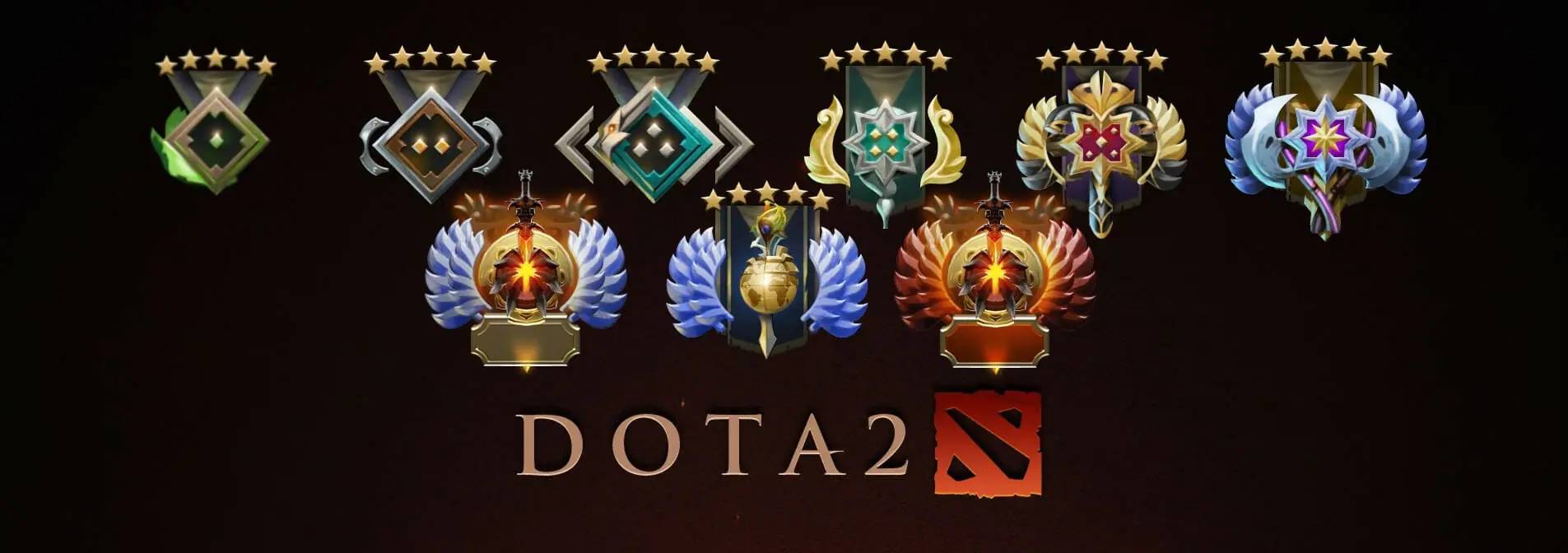
Recalibration or resetting your Dota 2 rank may be an effective strategy in a situation where your current MMR does not represent you. Most of the players believe in recalibration after long gaps, switching roles, or massive gains in the knowledge of the game. A clean slate can be offered to you in the system to show your real level of play only in case you approach it with a purpose. Recalibration can help make you climb faster, not go backwards when done right.
Requirements for Rank Reset/Recalibration
To recalibrate, players must satisfy the following requirements that Valve requires at the time of the recalibration:
- An accomplished past season of rated matches. To get a new calibration cycle, you have to have a rank badge in the previous season.
- An authenticated cell phone number associated with your Steam account. Ranked matchmaking requires account integrity and a constant primary number.
- Many enough regular matches in the new season. Dota 2 is usually characterised by some recent match history being available so that the system can be provided with relevant data.
- Good account standing. None of the active comm bans, VAC bans, or high penalties for behavior score.
- The readiness to play 10 calibration matches (or as many as needed in the season at hand). These games are more volatile, and they take their toll on your new MMR.
Step-by-Step Advice for a Successful Recalibration
- Get Your Account Status Ready: Make the best of your behavior score before calibration. Should be 9,500-10,000 to be sure that you are assigned to stable teammates and minimise the chance of disruptive gameplay. Clean out any fines through playing unranked matches without any fouls.
- Specialized in Two Roles and Three Heroes: Recalibration Rewarding Consistency. Find areas where you make the most difference and heroes that you can consistently perform. Select heroes that have easy conditions to win, good laning, and the presence of a teamfight; this helps in having consistent performance throughout the 10 matches.
- Warm Up Before Calibration: Don’t go into calibration games cold. Play 1-2 unranked or turbo games to get the muscle memory going, reintroduce hero time, and get a psychological warm-up. This minimizes the early mistakes in the game, which usually lead to defeats.
- Don’t Line Up When there are High-Toxicity Hours: Emotional games are more punishing with Calibration volatility. Play during times when you are not as stressed, and the queue of your region is the best, and the time is usually during the evening hours, and not during the late hours when there is a tilt session.
- Test Each Match Like a Performance Test: Recalibration is a measure that tests your overall performance and not only your win rate. Pay attention to high-efficiency behaviors: high GPM/XPM, low death rates, regular warding, objective control, and contribution to a teamfight. High performance has a positive effect on MMR adjustments even in losses.
- Queue With at least one Reliable Teammate: Assuming there is a way, make sure to queue with someone whose playstyle is complementary to yours. It is not recommended to have more than two players on a stack; bigger stacks cause imbalances in matchmaking and inconsistent coordination.
Having made a great improvement, or the present MMR is being withheld by an old performance record, then it is worth recalibration. It gives you an opportunity to show your true talent in a very short time; however, it also has instability that can be harsh in case of improper preparation. Serious about the process, recalibration would be a potent tool to climb the MMR quickly.
How MMR Gains and Losses Work
The mechanics of how Matchmaking Rating (MMR) is earned and lost are what every person who intends to ascend the Dota 2 ladder needs to know as a prerequisite. Rank progression is directly linked to your MMR, so it is beneficial to know what influences each outcome in order to enable players to make informed choices prior to queuing. It also explains why special high or low MMR changes are observed in certain matches, and why some behavioral patterns, including abandoning, are long-term effects. As the 2026 updates emphasize greatly on consistency of the players, mastering these mechanics is more critical than ever.
Key Factors That Influence MMR Adjustment
- Solo vs. Party Queue: Solo games are more predictable and stable in changes in MMR. Unless there are any modifiers, the solo players will usually make or lose a fixed sum per match. Party games, however, use a different calibration formula, which is calculated by assessing the average MMR of the party and making gains or losses accordingly. Big parties may mean less profit and more loss, which is a tradeoff of the benefits of coalition play.
- Double Down ( Turbo and Ranked Roles): Double Down Tokens can only be used on ranked and enable players to increase the stakes in MMR twofold. Upon being activated, a win increases the MMR by twice as much but also a loss. In Turbo Mode, it does not affect anything because it is purely a Ranked feature. It is to be applied on a limited basis and in games that have a high level of trust in the draft and early synergy.
- Role Queue and Role Performance: In queuing under Role Queue, MMR modifications are made towards your core or support role independently. The system compares the performance and success of the players of the same level in that particular position. Out-of-role winning can provide slightly different MMR changes as a result of the system trying to maintain the role-based ranking correctly.
- Abandon and Behavioral Penalties: intentional abandonment of a ranked match or automatic abandonment because of disconnection will result in an immediate loss of MMR. Although your team might end up winning in the end, the abandoning player suffers the loss, and the rest of the teammates are not subjected to MMR penalties, but also lose the chance to gain. Constant abandonment has effects on matchmaking in the future, causing more severe lobbies and reduced MMR opportunities.
Learning MMR mechanics will promote more intelligent decision-making at every queue. When you know how things such as roles, party size, and the use of tokens will increase your rating, then it is possible to select the conditions that will give you the most progress in the long term. Climbing will not be the streaky performance but consistent strategic play in every game.

Mental Barriers and Common Myths
The role of psychology in determining the speed at which the players ascend the ranks of Dota 2 is decisive, more so in a competitive setting where a single slip can cause a massive loss. Being aware of the traps of the mind that inhibit progress and the myths that misrepresent the manner in which players go about the process of improvement makes it possible to form a smoother ladder of advancement. Mechanical skill can be as effective as strong mindset management in the quest of someone who intends to climb fast. By eliminating false beliefs and the traps of emotions, the players are placed in a better position to succeed in the long term.
Common Mental Barriers
Fear of losing is one of the most common barriers that makes players too cautious, not wanting to queue, or not willing to make the required in-game decisions. There is also the other of throwing blame around among teammates; this will only turn attention away from themselves and will not allow them to learn through their own mistakes. Finally, tilt, the emotional roller coaster post-frustrating games, results in hurried decision-making, bad mechanical playing, and increased chances of losing streaks.
Myths to Stop Believing
Another big myth is that KDA is the most valuable metric of skill, whereas Dota 2 attributes goals, pressure of a map, and team influence to a much greater extent. The next myth is that supports are unable to climb, and numerous high-ranking players achieve the promotion only with the help of supports due to good vision control, lane management, and shot-calling. Another myth is that a single poor player on the team is certain to cost the team a game; the reality is that there are always lots of games where macro choices, draft knowledge, and game-in, game-out consistency are the reason a particular game is lost.
By rejecting myths that cause harm and identifying the mental barriers, players will greatly decrease the number of setbacks that can be avoided. A more disciplined and healthy mind leads to smarter choices, more consistent gameplay, and ranking development. In the long run, this mental base will be one of the greatest instruments of sustainable MMR development.
Conclusion
The final step of climbing the Dota 2 ladder is reducing to refining the core and learning your position and making consistent and data-driven adjustments. Players who learn to work towards a team, whether organizing basic motions or facilitating important power spikes, receive many more benefits than players who attempt to take the win on their own. Self-control, particularly in losing streaks, will avoid the extra MMR swings that are unnecessary, and ensure that your decision-making is sharp. Keeping up with the changing meta is what makes you a relevant player and makes your hero pool and playstyle less obsolete as the patches update. Continue perfecting your strategy, be patient, and believe that with each targeted game, you are one step closer to the rank you are targeting.
FAQs
How often should I reset or recalibrate my MMR?
It is sufficient to reset the clock once a season. Repeated resets do not have increasing returns and may as well as not increase your matchmaking but increase its unpredictability.
Does party size affect how fast I can climb?
Yes. Single queues generally provide more predictable outcomes since you can manage more variables, whereas bigger party stacks can pair you with organized players, speeding down the process.
Can supports climb as efficiently as core players?
Absolutely. Supplying powerful blows, vision manipulation, tempo generation, and empowering power spikes can propel win rates nearly as effectively as underlying performance.
How long does it take to climb one full rank tier?
It depends on consistency. The win rate with a high level of attention and positive progress, players are able to rise to the next tier in several weeks.
Are certain roles or heroes better for fast climbing?
Yes. Unwobbling meta heroes that are present in the lane and that have easily definite win conditions irrespective of position are likely to provide more expeditious advancement. Fashionable items tend to do worse than comfort ones.
Does Double Down speed up climbing?
It is, but you have to be confident and at your best performance times. Badly timed Double Downs can reverse your gains by a huge margin.
Is it better to spam one hero or diversify my picks?
Hero specialization tends to be more efficient in the case of a fast climb. As soon as you have stabilized your rank, an increase in your pool can assist you in managing an increased number of metas and draft situations.

Leave a comment